Leaves of the Chosen: How Plant Parenthood Became America's Most Photogenic Cult
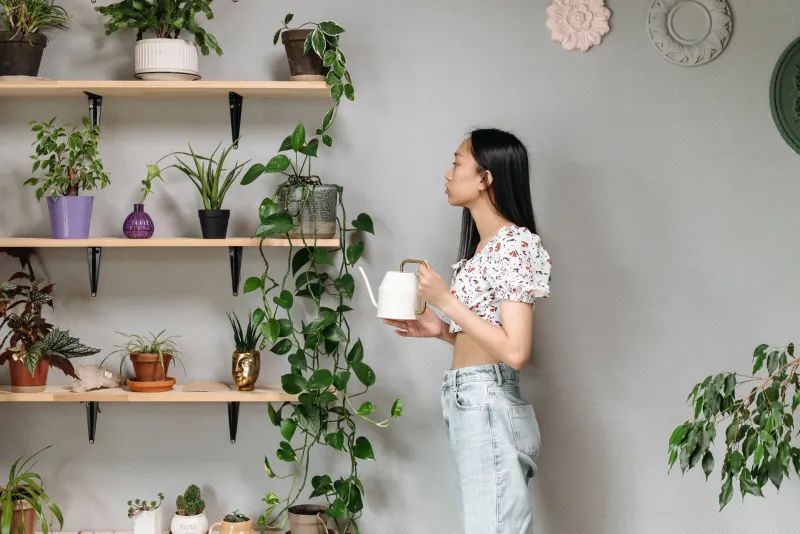
Let's establish a few facts before we proceed. Fact one: you have talked to your pothos. Fact two: you named it. Fact three — and this is the one that should concern you — you felt genuinely guilty the morning you forgot to check its soil moisture. You didn't feel guilty about skipping the gym, ignoring your mother's texts, or eating cereal for dinner three nights in a row. But Gerald the Pothos? Gerald needed you. And you were there for Gerald.
Congratulations. You are already inside the plant cult. The terrarium door has closed behind you, and the grow lights are on.
How It Started (Spoiler: It Was Always the Algorithm)
The Great Houseplant Awakening didn't materialize from thin air. Like most modern belief systems, it had an origin story rooted in anxiety, aesthetics, and the specific boredom of being trapped indoors during a global pandemic. When Americans couldn't travel, socialize, or feel any meaningful sense of control over the external world, they did what humans have done since the dawn of time: they found something small and alive to obsess over.
Plant sales in the US surged by over 50 percent between 2019 and 2021. Etsy shops dedicated to rare cuttings appeared overnight. Facebook groups with names like "Rare Plant Addicts" and "Variegated Beauties Only" swelled to tens of thousands of members with the kind of fervor usually reserved for MLM downlines and megachurch attendance drives.
This was not a coincidence. This was a recruitment pipeline, and the algorithm was running it beautifully.
The High Priests of the Leaf
Every cult needs its charismatic leadership, and plant culture delivered with suspicious efficiency. Enter the Instagram plant influencer: a category of content creator that somehow convinced millions of people to watch a six-minute video about the correct way to unpot a Philodendron gloriosum as if it were appointment television.
These are not gardeners in the traditional sense. Your grandmother was a gardener. She grew tomatoes and didn't need a ring light. Plant influencers are something else entirely — lifestyle architects who have constructed elaborate belief systems around the idea that the health of your houseplants is a direct reflection of your spiritual alignment, emotional intelligence, and general worthiness as a human being.
They speak in a specialized lexicon that functions as both gatekeeper and initiation rite. "Fenestration." "Aerial roots." "Monstera deliciosa versus borsigiana." "Is your petiole truly geniculate?" Utter these phrases incorrectly in the comments section of a plant influencer's post and watch the community descend. Say them correctly, and you have passed the first test. You are one of us now.
The Variegated Price Conspiracy (This One Is Actually Kind of Real)
Here is where we put on our tinfoil gardening gloves, because the pricing mechanics of the rare plant market deserve genuine scrutiny.
A standard Monstera deliciosa — the one with the dramatic split leaves that has appeared in approximately 40 percent of all millennial apartment décor since 2018 — costs maybe $30 at your local Home Depot. Reasonable. Decorative. No cult activity required.
Now consider the Monstera deliciosa 'Albo Variegata.' Same plant. Some of the leaves have white patches due to a genetic mutation that reduces chlorophyll. It cannot photosynthesize as efficiently. It is, by most botanical measures, a slightly less functional plant. In 2021, single cuttings of this plant were selling on eBay for $500 to $1,500. Established plants with multiple leaves regularly fetched $5,000 or more.
Who decided this? Nobody can give you a straight answer. The official explanation involves supply, demand, and the difficulty of propagating variegated plants true-to-type. The unofficial explanation, whispered in the darker corners of plant Facebook groups, is that a loose network of rare plant collectors and sellers essentially coordinated scarcity — holding back cuttings, gatekeeping propagation knowledge, and artificially sustaining a market that rewarded early adopters and punished newcomers.
Is this a conspiracy? Probably not in the shadowy, smoke-filled-room sense. Is it a self-reinforcing belief system in which perceived rarity creates real value, which creates real community, which creates real psychological investment, which makes the whole thing extremely hard to exit? Absolutely. That's just called a cult, and it has a very nice Instagram grid.
The Ritualistic Watering Schedule and Other Sacred Practices
What distinguishes a hobby from a belief system is the presence of ritual — repeated, prescribed behaviors that create meaning through their very consistency. Plant parenthood has these in abundance.
The weekly soil check. The seasonal repotting ceremony. The careful rotation toward light sources. The misting. Dear lord, the misting debates. Entire Reddit threads have collapsed under the weight of disagreements about whether misting is beneficial or actively harmful, conducted with the theological intensity of a 16th-century church council.
Plant people also practice a form of confession and community accountability that would be familiar to anyone who has spent time in a twelve-step program or a particularly intense book club. "I let my fiddle leaf fig dry out too much and now I'm scared to post about it." "I repotted during the wrong season. I know. I know. I'm dealing with it." The community offers forgiveness, but only after the appropriate amount of public self-flagellation and a detailed description of corrective action taken.
What Your Plants Are Actually Teaching You
Here is the part where we admit, slightly reluctantly, that the plant cult might be onto something. Not the $5,000 leaf. Not the influencer who insists you need a specific Japanese brand of fertilizer that ships in a minimalist white bag and costs $40 for 200 grams. Not any of that.
But the underlying mechanics — the attention, the patience, the daily practice of noticing something outside yourself — those are genuinely useful human behaviors. Caring for a living thing creates routine. Routine creates stability. Stability creates the psychological conditions under which people feel capable of caring for other living things, including themselves.
The plant cult, like most cults, is selling something real underneath all the merchandise and hierarchy and gatekeeping. It's selling the feeling of competence. The feeling of belonging. The feeling that you are, in some small chlorophyll-adjacent way, keeping something alive in a world that often feels like it's trying to kill everything.
Gerald the Pothos understands. Gerald has always understood.
The Exit Ramp Nobody Takes
Here is the final, damning piece of evidence that plant parenthood has fully crossed the line from hobby into belief system: almost nobody leaves.
People leave CrossFit. People leave kombucha. People leave entire religions. But plant people just... accumulate more plants. The collection grows. The terminology deepens. The follow count on plant-specific Instagram accounts climbs. The grow tent appears in the spare bedroom, then expands to fill it entirely, then colonizes the hallway.
You don't get out of the plant cult. You just run out of windowsill space and start researching grow light spectrums at 1 AM, which is its own kind of transcendence.
Welcome to the congregation. Your Monstera will see you now.