From Beanie Babies to Bitcoin: The Eerie Science of How Collecting Rare Stuff Turns Normal People Into True Believers
Let's talk about your aunt. You know the one. She had a spare bedroom — no, a shrine — wall-to-wall shelving, every Beanie Baby sealed in its little plastic case, tags pristine, soul sold. She refused to let children touch them. She tracked secondary market prices on a dial-up modem. She had a newsletter. And if you suggested, even gently, that a stuffed pelican named Scoop was not a retirement plan, she looked at you like you'd just defaced a cathedral.
Here's the uncomfortable question nobody asked at the time: Was she in a cult?
Spoiler alert from your friends at Conspiracy Guy Cult — kind of, yeah. And she's got a lot of company.
The Brain on Scarcity: A Love Story Gone Wrong
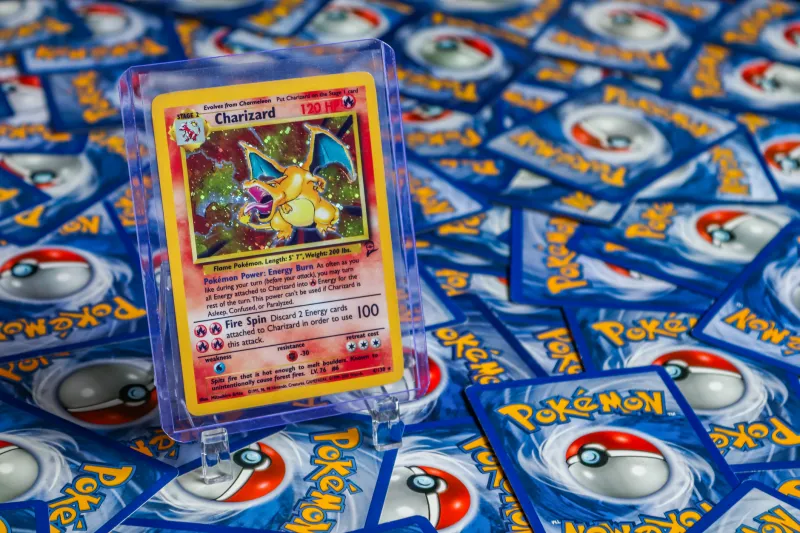
Every great collecting frenzy starts with the same ingredient: manufactured rarity. Ty Inc. didn't accidentally retire Beanie Babies. Pokémon didn't stumble into holographic scarcity. Nike didn't trip and fall into releasing 300 pairs of a shoe that 300,000 people want. These are deliberate, precise, beautifully evil decisions rooted in one of the oldest tricks in the human psychology playbook — if you can't have it easily, you want it desperately.
Neuroscientists call this the scarcity heuristic. Your brain, bless its ancient little heart, interprets limited availability as a signal of value. It's the same wiring that once told your ancestors to hoard berries before winter. Now it tells a grown adult to set a 3 AM alarm to refresh a Supreme drop page. Same neurons, different stakes, equally unhinged behavior.
Cults have known this forever. Exclusive knowledge, restricted membership, secret rituals — scarcity isn't just a sales tactic, it's a devotion accelerator. The harder something is to access, the more meaningful it feels to have it. Your PSA-graded Charizard isn't just a card. It's proof you made it in.
FOMO Is Just Recruitment by Another Name
Fear of Missing Out gets dismissed as a millennial buzzword, but it is genuinely one of the most potent forces in human social behavior, and collectors are marinated in it constantly.
Think about how sneaker culture operates. A limited Jordan colorway drops. The community explodes — Twitter, Reddit, StockX forums, YouTube unboxings. If you don't have it, you're not just without a shoe. You're outside. You're watching through the window while the real believers celebrate inside. The social exclusion is the point. It's not accidental friction; it's the mechanism.
This is textbook cult recruitment architecture. Create an in-group. Make belonging feel earned and urgent. Ensure that non-participation looks, from the outside, like failure. Classic high-demand group behavior, now available in a size 10.5 with a gum sole.
The crypto world perfected this into an almost academic art form. "HODL" isn't just slang — it's a loyalty oath. "Weak hands" isn't a descriptor — it's a moral judgment. Selling your Bitcoin during a dip isn't a financial decision; it's apostasy. The language of collecting communities increasingly mirrors the language of belief systems, and that is not a coincidence.
The High Priest Problem: Charismatic Leaders in Collector Communities
Every cult needs a prophet, and collector culture has been producing them at an alarming rate.
Consider the sneaker YouTubers with millions of subscribers who dictate which drops matter, which resellers are demons, and which brands have "sold out." Or the crypto Twitter accounts — some anonymous, some not — whose single posts move markets and whose followers treat their analysis like scripture. Or the Pokémon card breakers on Twitch, cracking packs live while thousands of viewers experience parasocial joy and heartbreak in real time, tipping actual money for the privilege of watching.
These figures function as community anchors, taste-makers, and moral authorities simultaneously. They tell you what's valuable, what to feel about it, and who the enemies are. Disagreeing with them publicly is a social risk. Agreeing with them publicly is a social reward. Sound familiar? It should. This is the influencer-as-cult-leader pipeline, and collecting communities are among its most fertile grounds.
The parasocial bond between collector and community leader is particularly sticky because it's reinforced by shared financial stakes. If your favorite crypto influencer says Ethereum is going to $10,000 and you've put money in, you are now emotionally and financially invested in that person being right. Questioning them feels like questioning yourself. That's not fandom anymore. That's something older and more dangerous.
Tribal Identity and the Collector's War on Outsiders
Ask a serious Pokémon card collector what they think of people who buy cards just to flip them. Watch the temperature drop. Ask a sneakerhead what they think of bots that scoop drops. Feel the righteous fury. Ask a Bitcoin maximalist about Ethereum holders. Grab a snack; this will take a while.
Every collector community develops an in-group identity so robust that it requires, almost by definition, an out-group to push against. The flippers, the normies, the paper hands, the bootleggers — these are the heretics. Defining yourself by what you aren't is one of the most reliable indicators of cult-like group dynamics, and collecting communities do it constantly, loudly, and with impressive creative vocabulary.
This tribal structure also makes communities remarkably resistant to outside criticism. Point out that the Beanie Baby market collapsed. Point out that most NFT projects went to zero. Point out that sneaker resale is, economically speaking, a fairly precarious thing to build a personality around. You will not be thanked. You will be told you "don't understand the culture." Which is, word for word, what people say when you question their religion.
So Are Collectors in a Cult? (Our Totally Unscientific Verdict)
Look, we're not here to tell you to sell your graded cards or dump your crypto or stop sleeping outside a Foot Locker. We believe everything. Mostly. And we believe that humans are wired to find meaning in objects, communities, and rituals — and that there's something genuinely beautiful about that, even when it's a little unhinged.
But the overlap between obsessive collector culture and cult indoctrination tactics is not subtle. Manufactured scarcity, FOMO-driven urgency, charismatic community leaders, tribal identity, financial stakes that make critical thinking feel like betrayal — these aren't just marketing tactics. They're the architecture of belief.
Your aunt with the Beanie Babies wasn't crazy. She was just early. The rest of us caught up, swapped the stuffed animals for JPEGs and limited drops, and called it investing.
The shrine just got a Discord server. The newsletter became a Substack. And Scoop the pelican, wherever he is, is probably still in his plastic case, waiting for the prophecy to be fulfilled.
We'll be here when it happens.