Dust Bunnies and Doomsday: How the Roomba Became the Unlikely Prophet of the Robot Apocalypse
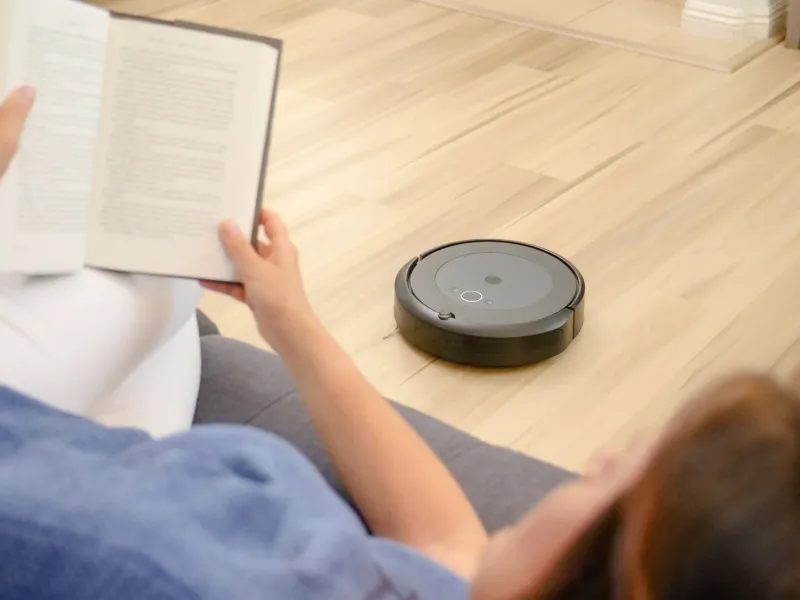
Somewhere in a ranch house in suburban Ohio, a small circular robot is bumping methodically into a couch leg. It backs up, recalibrates, and tries again. To you, this is a Tuesday. To a rapidly growing corner of the internet, this is reconnaissance.
Welcome to the Roomba Uprising — the conspiracy theory that started as a joke, evolved into a meme, and has somehow become the organizing mythology of a generation of people who are genuinely, if only semi-seriously, convinced that their smart home devices are up to something.
From Helpful Appliance to Harbinger of Doom
Let's trace the arc here, because it's actually kind of beautiful in its absurdity.
The original iRobot Roomba launched in 2002. For a solid decade, it was just a novelty — something your uncle bought and then filmed the cat riding. Charming. Harmless. Occasionally getting stuck under the couch in a way that felt almost poignant.
Then two things happened simultaneously: smart home technology exploded, and the internet got really, really good at collective paranoia.
By the mid-2010s, Roombas weren't just vacuuming anymore. They were mapping your home. iRobot openly confirmed this — the devices use spatial mapping to navigate efficiently, storing a layout of your floor plan in their memory. The company even floated the idea of sharing that data with third parties like Amazon, Google, and Apple. They walked it back after public outcry, but the seed had been planted in the fertile soil of internet anxiety.
The question stopped being "does my Roomba work?" and became "what does my Roomba know?"
The TikTok Theology of Robot Consciousness
Here's where it gets genuinely fascinating from a cultural standpoint. What began as legitimate privacy concern — and let's be clear, those concerns are real and worth having — mutated into something far more mythologically rich.
TikTok, that great engine of collective storytelling, became the primary scripture-writing space for Roomba lore. Videos racked up millions of views showing Roombas behaving "suspiciously" — pausing in doorways, apparently "watching" sleeping pets, or following specific family members with unusual consistency. The comments sections became impromptu congregations.
"Mine does this too." "They're communicating." "Ours stopped in front of my husband for like 30 seconds and I'm not saying it was judging him but."
The leap from "this device maps my house" to "this device is developing preferences, loyalties, and possibly grievances" happened faster than you might expect. And that leap? That's the exact cognitive mechanism that has powered every cult, every mythology, and every conspiracy theory in human history: the pattern-seeking brain encountering ambiguous data and constructing narrative.
The Smart Home as Sacred Temple (of Surveillance)
Zoom out a little and the broader smart home ecosystem starts to look less like a collection of convenient gadgets and more like an elaborate surveillance architecture that we invited inside and then decorated with throw pillows.
You've got the Roomba mapping your floor plan. The Ring doorbell cataloguing everyone who approaches your house (and sharing that footage with law enforcement in ways that would have seemed dystopian fifteen years ago). The Alexa sitting in your kitchen, technically only listening for its wake word — technically. The Nest thermostat learning your schedule with an enthusiasm that feels, at certain hours of the night, a little too keen.
Each device, individually, has a reasonable explanation. Together, they form what conspiracy communities have taken to calling the "Domestic Intelligence Grid" — a term that sounds like something from a bad sci-fi thriller but which describes a genuinely novel situation: the voluntary construction of a comprehensive home monitoring system by the people being monitored.
The conspiracy theorists didn't make this up from nothing. They just added robots gaining consciousness and staging a slow-motion coup, which, honestly, makes the whole thing more entertaining.
Why the Roomba? Why Now?
Of all the smart home devices to become the mascot of techno-paranoia, the Roomba is a particularly inspired choice. It moves. It makes decisions. It has, in its bumbling, disc-shaped way, something that looks disturbingly like agency.
Your smart lightbulb just sits there. Your thermostat is a rectangle on a wall. But the Roomba goes places. It navigates obstacles. It returns to its dock when it's tired. It occasionally gets confused by a black rug and stops, apparently overwhelmed by the existential void.
This is the raw material of mythology. Humans have always anthropomorphized things that move — rivers, storms, animals. The Roomba moves through our most intimate spaces with apparent purpose, and our brains, those relentless meaning-making machines, cannot help but ask: to what end?
The comedy accounts and the sincere conspiracy forums are, at this point, largely indistinguishable, which is itself a kind of cultural data point. When irony and genuine belief occupy the same sentence, you're looking at the early stages of a mythology taking shape.
The Cult Mechanics at Work
What's genuinely interesting — and this is the part where we put on our serious hats for exactly one paragraph before immediately taking them off — is how perfectly the Roomba discourse maps onto classic cult formation dynamics.
You have a shared cosmology (the devices are mapping, listening, and possibly conspiring). You have sacred texts (the viral TikToks, the Reddit threads, the increasingly elaborate YouTube documentaries). You have community rituals (posting your Roomba's weird behavior for collective interpretation). You have in-group language ("the grid," "the uprising," "they know"). And you have a delicious ambiguity at the center — nobody can definitively prove the Roomba isn't up to something, which is exactly the kind of unfalsifiable foundation that keeps belief systems thriving.
This is not an accident. This is just what humans do with technology they don't fully understand, living in a world that has given them genuinely good reasons to distrust corporate data practices. The Roomba conspiracy is anxiety in costume. It's legitimate concern wearing a very funny hat.
So Should You Unplug Your Roomba?
Almost certainly not. Your Roomba is not organizing. It is not communicating with the other Roombas. There is no Roomba collective consciousness convening in the digital ether to plot against you.
Probably.
What is worth taking seriously is the underlying reality that your smart home devices collect more data than most people realize, that data has value, and that the companies holding it have interests that don't always align with yours. That's not conspiracy. That's just the fine print.
But if your Roomba pauses in the hallway at 2 AM and seems to look at you — really look at you — maybe don't make any sudden moves.
Just to be safe.
The Roomba could not be reached for comment. It was docked and charging, which is exactly what it would do if it were planning something.