Rise and Repent: How a Jar of Bubbling Goo Became the Most Successful Cult Recruitment Tool of the Pandemic Era
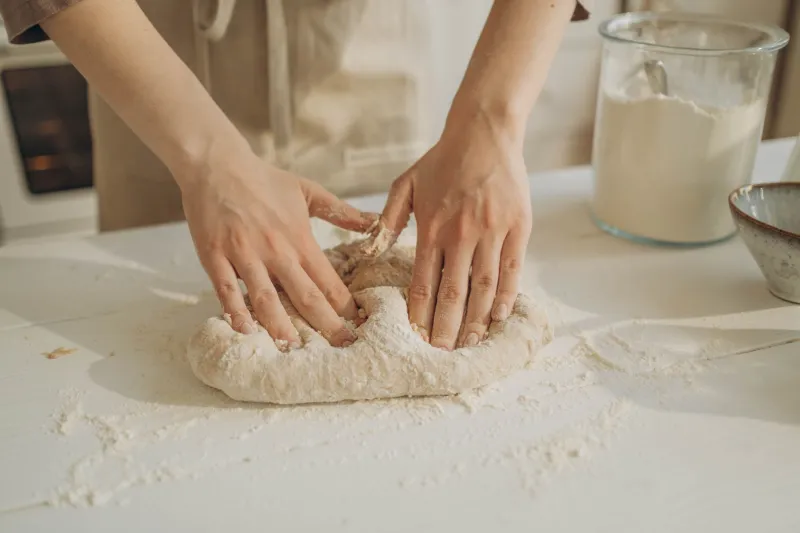
Somewhere between March 2020 and the complete dissolution of your sense of self, you either became a sourdough person or you watched helplessly as your friends did. What started as a harmless hobby for bored homebodies quietly fermented into something far more organized, far more intense, and far more theologically complex than anyone's rustic boule had any right to be.
We're not saying Big Flour engineered the pandemic. We're just saying the timing was extremely convenient for Big Flour.
In the Beginning, There Was the Mother
Every cult worth its salt — or in this case, its wild yeast — has an origin mythology. For the Sourdough People, it begins with the starter: a living colony of bacteria and yeast that devotees refer to, without apparent irony, as their mother. Not "my starter." Not "my fermentation project." Their mother.
You feed the mother. You name the mother. You post Instagram stories about the mother at 11 PM on a Tuesday like she just graduated college. People named their starters Breadward, Yeastus Christ, and — and we cannot stress enough that this is real — Gluten Morgen. The naming ritual isn't quirky. It's initiation. The moment you give a jar of flour paste a personality, you've crossed a threshold that is very difficult to uncross.
Cult scholars — and yes, we've consulted exactly the number of cult scholars you'd expect from a website called Conspiracy Guy Cult — will tell you that the fastest way to bind someone to a group is to give them a living thing to care for. Responsibility creates loyalty. Loyalty creates identity. Identity creates a person who will absolutely guilt-trip their housesitter about feeding the starter while they're in Sedona.
The Hierarchy of Hydration
Once you had your starter, you needed to find your people. And your people had already organized themselves into a disturbingly well-structured online society.
At the top sat the Ancients — bakers who claimed their starters were decades old, handed down through family lines like a sourdough inheritance. These individuals spoke in ratios and cryptic percentages. "I run a 75% hydration loaf," they'd announce, and the comment section would erupt in reverent awe, like someone had just quoted scripture at a tent revival.
Below them were the Apprentices, furiously documenting their "crumb structure" with the seriousness of forensic investigators. A good open crumb — those big, irregular air pockets inside a sliced loaf — was a spiritual achievement. A dense, gummy interior was a moral failing. People cried. Actual tears. Over bread.
At the very bottom were the Uninitiated: people who asked if they could just use instant yeast instead. These individuals were not technically shunned, but they were spiritually shunned, which is arguably worse because nobody will explain exactly why you've been shunned.
The Ritual of the Feed
Here's where things get properly culty. Maintaining a sourdough starter requires a daily feeding — you discard a portion of the existing culture and add fresh flour and water on a strict schedule. Miss a feeding, and the mother suffers. She turns gray. She smells like nail polish remover. She becomes, in the language of the community, sad.
This is a system of daily obligation disguised as a hobby. You can't take a spontaneous weekend trip without making arrangements for the mother. You can't sleep in. The starter does not care that it's Sunday. The starter does not observe federal holidays.
If you designed a cult from scratch and your goal was maximum behavioral control with minimum obvious coercion, you would invent sourdough starter. The genius is that the living organism does the demanding — not a charismatic leader, not a doctrine, not a hotline number on a pamphlet. Just a jar of goo that will literally die if you stop paying attention to it. The guilt is outsourced to microbiology.
Starter Exchanges and the Spreading of the Faith
No cult sustains itself without recruitment, and the sourdough community cracked the missionary model wide open. During peak lockdown, people began sharing portions of their starters with neighbors, friends, and strangers on community Facebook groups. This was framed as generosity. It was also, functionally, evangelism.
You don't just receive a portion of someone's starter. You receive their lineage. Their history. Their feeding schedule, their preferred flour brand, their grandmother's technique, and an unspoken obligation to perpetuate the culture — both microbial and social. Accepting a starter is accepting a covenant. You are now part of someone else's bread story whether you wanted to be or not.
Some starters were traced back through documented chains of custody like rare wine or cursed jewelry. There were starters allegedly descended from Gold Rush-era San Francisco cultures, passed hand to hand across generations. Nobody could verify this. Nobody questioned it either, because questioning the lineage of someone's century-old starter at a neighborhood bread swap is the kind of social move that gets you quietly uninvited from everything.
The Wellness Pipeline Runs Through the Oven
Here's the thread that ties this whole loaf together: sourdough didn't exist in a vacuum. It arrived alongside kombucha mothers, fermented vegetable crocks, and an entire wellness industrial complex that had been quietly telling Americans for years that if they just took personal responsibility for their gut microbiome, everything would be fine.
The sourdough cult is a direct downstream product of that pipeline. It promised control during a period of catastrophic uncontrollability. It offered community when community was physically illegal. It gave people a practice — a daily ritual with tangible, edible results — in a moment when the outside world had stopped making sense entirely.
Which is, to be clear, genuinely understandable. We're not here to mock the comfort of bread. We are, however, here to point out that "a living organism that demands daily care, has a name, has a lineage, connects you to a hierarchical community with specialized knowledge and gatekept techniques, and produces a product you are compelled to share with others in order to grow the community" is a sentence that describes both sourdough starter culture and the organizational structure of at least four groups currently under federal observation.
Where Are They Now?
The great bread rush receded as the world reopened, but don't be fooled into thinking the cult dissolved. It simply went underground — which is, coincidentally, exactly where you keep a starter if your kitchen runs warm.
Facebook groups dedicated to sourdough still have hundreds of thousands of members posting daily crumb shots with the devotional energy of people who have found something worth believing in. The Ancients are still out there, running their decades-old cultures, waiting patiently for the next disruption to send fresh recruits toward the flour aisle.
And somewhere in America right now, someone is explaining to their housesitter, in extremely serious tones, that the jar in the back of the fridge is not a science experiment. It's family.
Feed her on Tuesdays.
Don't ask questions.
Welcome to the culture.