Aprons, Altars, and Aesthetic Witchcraft: The Suspicious Spiritual Agenda Hidden Inside the Cottagecore Movement
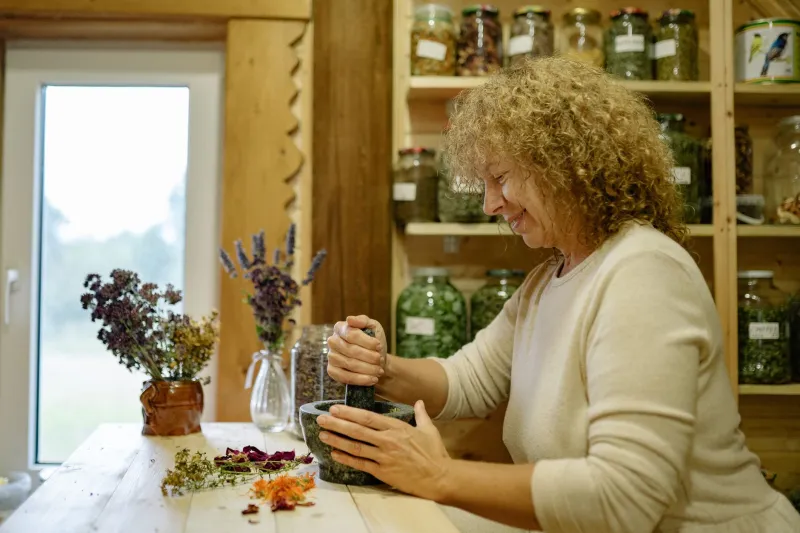
Let us paint you a picture. It's a Tuesday. A young woman in a flowy linen dress stands in a sun-drenched kitchen. Dried lavender hangs from the ceiling. A cast iron skillet sits on a wood-burning stove. She's pressing flowers into a journal and humming softly. The camera — her phone, propped against a mason jar — is recording everything for BookTok.
Is she making content? Yes. Is she practicing a form of low-key earth-based spirituality that her great-great-grandmother would have recognized immediately as hedge-witch behavior? Also yes. Does she know that? Unclear. Does it matter? Absolutely not, because the aesthetic is immaculate and the pickle brine is working.
Welcome to cottagecore, the internet's most charming, most misunderstood, and most quietly radical lifestyle movement — and what we at Conspiracy Guy Cult have identified as the most successful soft-launch of a spiritual mass conversion since the Hallmark Channel discovered Christmas.
From Pinterest Board to Belief System: A Timeline
Cottagecore didn't emerge fully formed from a Victorian novel, though it certainly dressed like it did. The aesthetic — romanticizing rural life, handcraft, foraging, soft domesticity, and general vibes of 'living in a fairy tale cottage in 1887' — began gaining serious traction on Tumblr around 2018 and exploded during the pandemic years when everyone trapped in a studio apartment suddenly needed to believe that a simpler, more intentional life was possible. Or at least follow someone who was living one.
The visual language was immediately distinctive: linen everything, wildflowers in mismatched vases, bread rising on a windowsill, beeswax candles, ceramic mugs, foraging baskets, and an almost aggressive absence of plastic. The color palette ran from cream to forest green with occasional detours into mushroom brown. If a mood board could smell like petrichor and warm butter, this was it.
What started as an aesthetic category rapidly accumulated something heavier: meaning. The cottagecore creator wasn't just showing you her kitchen. She was proposing an entire philosophy of how to exist — slowly, intentionally, in relationship with seasons and soil and the accumulated wisdom of women who knew which plants to dry and when. That's not an Instagram grid. That's a worldview. And worldviews, once adopted, have a tendency to ask more of you.
The Candle-Making-to-Coven Pipeline
Here is a documented progression that we have observed across multiple platforms and would like to submit as evidence:
Stage One: Follows a cottagecore account for the aesthetic. Reposts a photo of someone's herb garden. Buys one (1) linen tea towel.
Stage Two: Purchases dried lavender. Makes a sachet. Feels inexplicably proud. Starts a windowsill herb garden. Names the rosemary.
Stage Three: Attends a candle-making class. Discovers the class also covers 'intention setting.' Does not leave early.
Stage Four: Buys a moon phase calendar. Begins planning activities around lunar cycles 'just for fun.'
Stage Five: Is now fermenting things. Calls it 'ancestral healing.' Has opinions about sourdough hydration ratios that would alarm a bread scientist.
Stage Six: Has a dedicated altar space. Refers to it as 'a little shelf with meaningful objects.' The shelf has a candle, a crystal, a dried flower bundle, and a small printed card with a quote from a woman who lived in the 1600s and was definitely tried for something.
This is not a joke. This is the pipeline. And the pipeline is extremely well-designed, even if nobody designed it on purpose.
Pickling as Spiritual Practice: A Serious Investigation
We need to talk about the pickling.
Somewhere in the overlap between food preservation revival, gut health discourse, and ancestral trauma healing content, pickling became a thing. Not just a practical thing — people have been pickling since before refrigeration because they didn't want to die of winter — but a meaningful thing. A healing thing. A thing you do with intention and gratitude for the women who did it before you.
The fermentation-as-spirituality content genre is robust and growing. Search 'ancestral healing fermentation' on any platform and you will find creators who are genuinely, earnestly connecting the act of making kimchi or lacto-fermented pickles to grief processing, lineage repair, and somatic healing practices. The jar isn't just a jar. It's a vessel. The brine isn't just salt water. It's transformation.
Is this silly? Maybe. Is it also a completely coherent framework for reconnecting with embodied, sensory, cyclical practices in a culture that has spent fifty years optimizing for speed and disconnection? Also yes. The conspiracy here isn't that people are being tricked. It's that the thing doing the recruiting is a jar of cucumbers, and it's working better than most formal spiritual institutions have managed in decades.
BookTok, Barn Finds, and the Victorian Witch Rehabilitation Project
Cottagecore's literary wing deserves its own investigation. BookTok — TikTok's sprawling, passionate reading community — has developed a distinct cottagecore-adjacent subgenre that we can only describe as 'cozy witchcraft fiction,' populated by books featuring herbalists, hedge witches, women with mysterious gardens, and protagonists who communicate with crows. These books sell in extraordinary numbers. Readers don't just consume them; they inhabit them, building reading nooks that match the aesthetic, burning candles that match the vibe, drinking teas that match the protagonist.
The Victorian witch is having a full rehabilitation moment, and it's not subtle. The historical women who were persecuted for knowing which plants cured fever and which ones didn't — the midwives, the healers, the village wise women — are being reclaimed as spiritual ancestors by a generation that feels, perhaps not incorrectly, that a lot of institutional knowledge about living in relationship with the natural world got burned along with them. This isn't just aesthetic nostalgia. It's a fairly pointed cultural argument dressed in a really good apron.
What Are We Actually Talking About Here?
Here's the thing about cottagecore that separates it from most lifestyle trends: it has a genuine critique embedded in its aesthetics. The rejection of fast fashion, industrial food, screen saturation, and productivity culture isn't just vibes. It's a value system. And value systems, when they get community, ritual, shared language, and a sense of spiritual dimension, become something that rhymes with religion.
Nobody's calling it that. The cottagecore creator will tell you she's just someone who likes making bread and growing tomatoes. The BookTok witch will tell you the crystals are decorative. The fermentation enthusiast will tell you she's just interested in gut health.
And maybe they're right. Maybe it really is just a linen apron.
But the dried herb bundle is hanging by the door, the moon calendar is on the wall, and the rosemary has a name.
We're just saying.