Too Hot to Handle: The Suspicious, Saucy, and Completely Unhinged Story Behind the Great Sriracha Vanishing
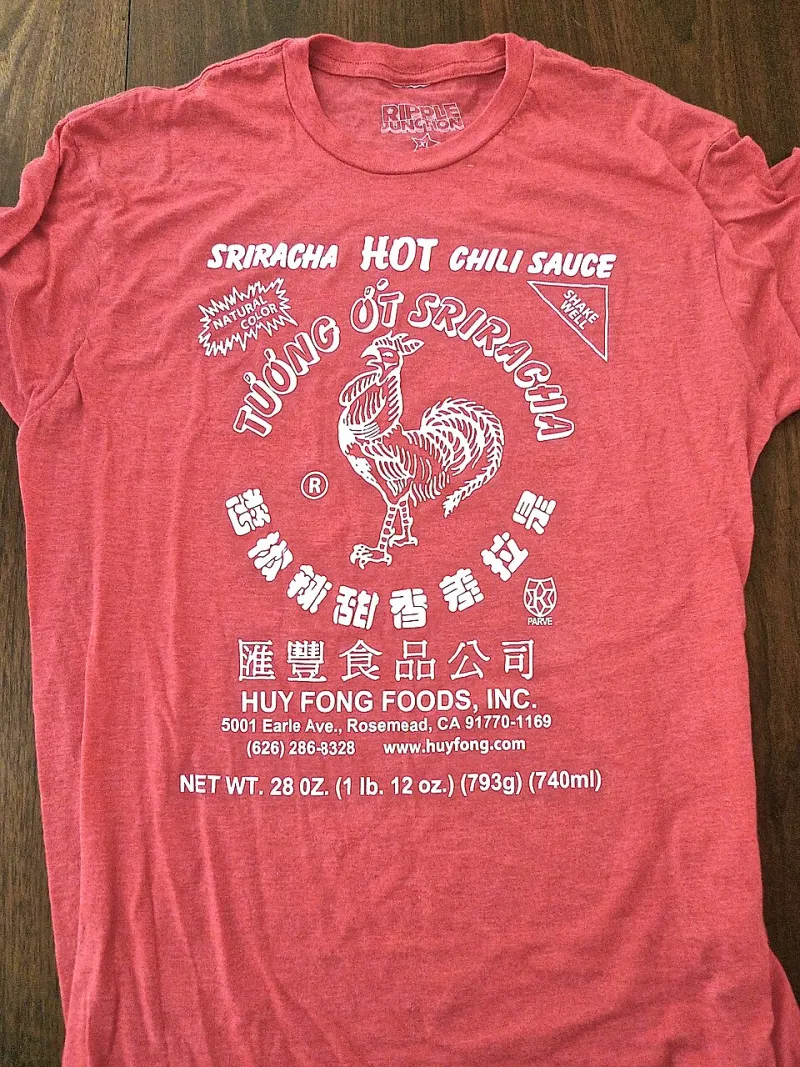
Photo: The Marmot, CC BY 2.0, via Wikimedia Commons
Let's establish the facts, because facts are important before you abandon them.
In the spring of 2022, Huy Fong Foods—makers of the iconic rooster-label Sriracha that has graced the tables of every Vietnamese restaurant, college dorm, and suspiciously hip brunch spot in America—announced it was halting production due to a severe shortage of red jalapeño peppers. The culprit, they said, was drought conditions in northern Mexico, where the peppers are grown. Production paused. Shelves emptied. A nation of heat-seekers stared into the void where their squeeze bottles used to be.
By 2023, the situation had not improved. Bottles were selling on eBay for forty, fifty, sixty dollars. A condiment. People were hoarding it like it was a controlled substance, which, if you've ever had Sriracha on scrambled eggs, you understand is not entirely irrational.
The official explanation was supply chain disruption. Drought. Logistics. The boring machinery of capitalism failing in boring ways.
We don't buy it. Pull up a chair.
The Timeline Doesn't Add Up (If You Squint Hard Enough)
Huy Fong Foods has been making Sriracha since 1980. Founder David Tran, a Vietnamese refugee who built an empire from a single family recipe, navigated four decades of agricultural variability, import regulations, and at least one extremely litigious lawsuit with his former pepper supplier without ever letting the shelves go bare.
Then suddenly, in 2022, drought conditions that had existed for years in the American Southwest and northern Mexico became catastrophic enough to halt production entirely? Meteorologists will tell you the drought was real and severe. We're not disputing the drought. We're disputing the timing.
Because here's what else was happening in 2022: the hot sauce market was experiencing a consolidation boom. Major food conglomerates were acquiring independent hot sauce brands at a pace that suggested someone, somewhere, had decided that flavor sovereignty was the next frontier of corporate control. Cholula went to Hormel in 2020. Texas Pete faced its own legal chaos. The condiment landscape was being redrawn.
Coincidence? Probably. But interesting coincidence? Absolutely.
The Psyop Pyramid: Our Completely Unscientific Ranking of Alternative Explanations
In the spirit of journalistic rigor—the loose, interpretive kind—we've ranked the most compelling alternative theories behind the Sriracha shortage from "actually plausible" to "please seek help."
Level 1 – Plausible With a Straight Face: Big Condiment orchestrated supply pressure on Huy Fong to soften the brand for acquisition. Huy Fong has famously resisted corporate buyout offers. Nothing creates acquisition pressure like a public perception of instability. This is how capitalism works. We're not even sure this is a conspiracy theory so much as just... business.
Level 2 – Requires One Drink to Explain: The pepper shortage was real but assisted—meaning someone with agricultural market influence made sure the bad conditions got just a little worse than they needed to be. Futures markets for agricultural commodities are a real thing. People do profit from scarcity. We're just saying the infrastructure exists.
Level 3 – Two Drinks, Dimly Lit Bar: The shortage was a deliberate palatability reset. Americans had become too accustomed to Sriracha's specific heat profile, and the global spice industry needed to reintroduce variety. The absence created demand for alternatives—and look, suddenly every restaurant has its own "house hot sauce" and artisanal pepper condiments are a category now. Someone benefited.
Level 4 – No More Drinks, You're Done: The rooster on the bottle is not a rooster. It's a sigil. The shortage was triggered intentionally to test population compliance with flavor scarcity as a precursor to broader food supply control mechanisms. The drought was a weather modification event. David Tran is fine. David Tran is great, actually. David Tran is on an island somewhere, and the island has excellent hot sauce.
We present these not as beliefs but as a spectrum. You choose your altitude.
We Interviewed Some People (Results Were Mixed)
In the interest of balance, we reached out to individuals across the sriracha-opinion ecosystem.
A supply chain consultant we'll call "Gerald" (because that's his name and he asked us not to use it, which we're doing anyway, sorry Gerald) told us the shortage was "textbook agricultural commodity disruption" and that the eBay resale prices were "a predictable market response to scarcity." Gerald seemed very confident. Gerald also works for a firm that does consulting for major food manufacturers. We're not saying Gerald is in on it. We're just noting that Gerald is adjacent to it.
A hot sauce enthusiast in Austin, Texas, who runs a blog called Capsaicin Nation and asked to be identified only as "The Scoville Witness," told us she'd been stockpiling Sriracha since 2019. "I knew something was coming," she said. "The signs were there. The pepper market was being manipulated. I have a spreadsheet." She sent us the spreadsheet. It was genuinely impressive and also somewhat alarming.
A Huy Fong Foods spokesperson did not respond to our request for comment, which is exactly what someone would do if they had nothing to hide, and also exactly what someone would do if they had everything to hide. Useful data point either way.
What Did We Learn? (Asking For a Friend)
Here's the thing about the Sriracha shortage that keeps us up at night—not the conspiracy theories, but the response to them. Americans mourned a condiment with the emotional intensity usually reserved for civic loss. There were news segments. There were op-eds. There were people genuinely grieving the absence of a squeeze bottle.
That's not about hot sauce. That's about how thoroughly a product can embed itself in daily ritual until its absence feels like a disruption of the self. Which is, coincidentally, exactly how you'd design a product if you wanted maximum psychological leverage during a period of manufactured scarcity.
The Sriracha came back, by the way. Huy Fong resumed production. The bottles returned. Prices normalized. The crisis resolved.
Almost like it was never meant to be permanent. Almost like it was meant to make you feel something.
We believe it was supply chain disruption. Mostly.